We are facing various global crises, including COVID-19, Russia’s invasion of Ukraine, geopolitical changes, economic crises, and regional security threats. Preconditions have changed drastically, and we are at a critical juncture to fundamentally reconsider policies and frameworks to deal with such crises. We need to address appropriate resources and policies, through building resilient global communities and knowledge-based resource hubs. GHIPP is strengthening global partnership by building the discussion platform “Japan’s Challenge” and sharing knowledge, lessons learned, and vision by creating new regional communities for resilience.
33rd Special Dialogue
July 29, 2026
“Japan’s Business: How did Japan re-emerge?“
Speaker: Professor Ulrike Schaede, Professor of Japanese Business; School of Global Policy and Strategy, University of California San Diego

Ulrike Schaede (ウリケ・シェーデ) is professor of Japanese business at the UC San Diego School of Global Policy and Strategy (GPS). She is the founding director of the Japan Forum for Innovation and Technology (JFIT), and the faculty coordinator of the International Management track at GPS.
Schaede’s research focuses on global business, and in particular Japanese business organization, strategy and management. Her main interest is to analyze different systems of capitalism and ways of organizing business, and to identify the social and economic efficiency consequences of these differences.
In 2024, she published シンニホンの経営 with Nikkei BP, and the English version of it as Japan Re-Emerges with Amazon Kindle.
Her 2020 book, “The Business Reinvention of Japan: How to Make Sense of the New Japan and Why It Matters” (Stanford University Press 2020), won the 2021 Masayoshi Ohira Memorial Prize from Japan, as well as the 2021 U.S. Axiom Business Book Award (silver medal, “Economics”). In 2022, it was published in Japanese as 再興 THE KAISHA 日本のビジネス・リインベンション by Nikkei BP. In 2022, Schaede also published a monograph titled “The Digital Transformation and Japan’s Political Economy” (with Kay Shimizu), at Cambridge University Press.
Schaede is Associate Editor of The Journal of the Japanese and International Economies. She also serves on the Advisory Board of the National Bureau of Asian Research (NBR Asia) in Seattle. In Japan, she is a member of the Advisory Board of Industrial Growth Platform Inc. (IGPI Group), as well as a research fellow and supporter of ICF, “Initiative to Co-Create the Future” at Mitsubishi Research Institute, and supporter of LINK-J, the “Life Science Innovation Network Japan.” She also serves on the advisory board of the IN-EAST program at the University of Duisburg-Essen in Germany.
Schaede is trilingual (English, German, Japanese), and has spent more than nine years of study and research in Tokyo, Japan. She has been invited as a visiting professor to Hitotsubashi University, as well as the research institutes of the Bank of Japan, Japan’s Ministry of Finance, Japan’s Ministry of Economy, Trade and Industry, and the Development Bank of Japan. She has also been a visiting professor at the UC Berkeley Haas School of Business, the Harvard Business School and Stanford University.
Ph.D., Japanese Studies and Economics, Philipps-Universität Marburg, Germany, 1989
M.A., Japanese Studies and Economics, Friedrich-Wilhelms Universität Bonn, Germany, 1987
Translator’s Diploma in Japanese, Friedrich-Wilhelms Universität Bonn, Germany, 1985
Dialogue Facilitator
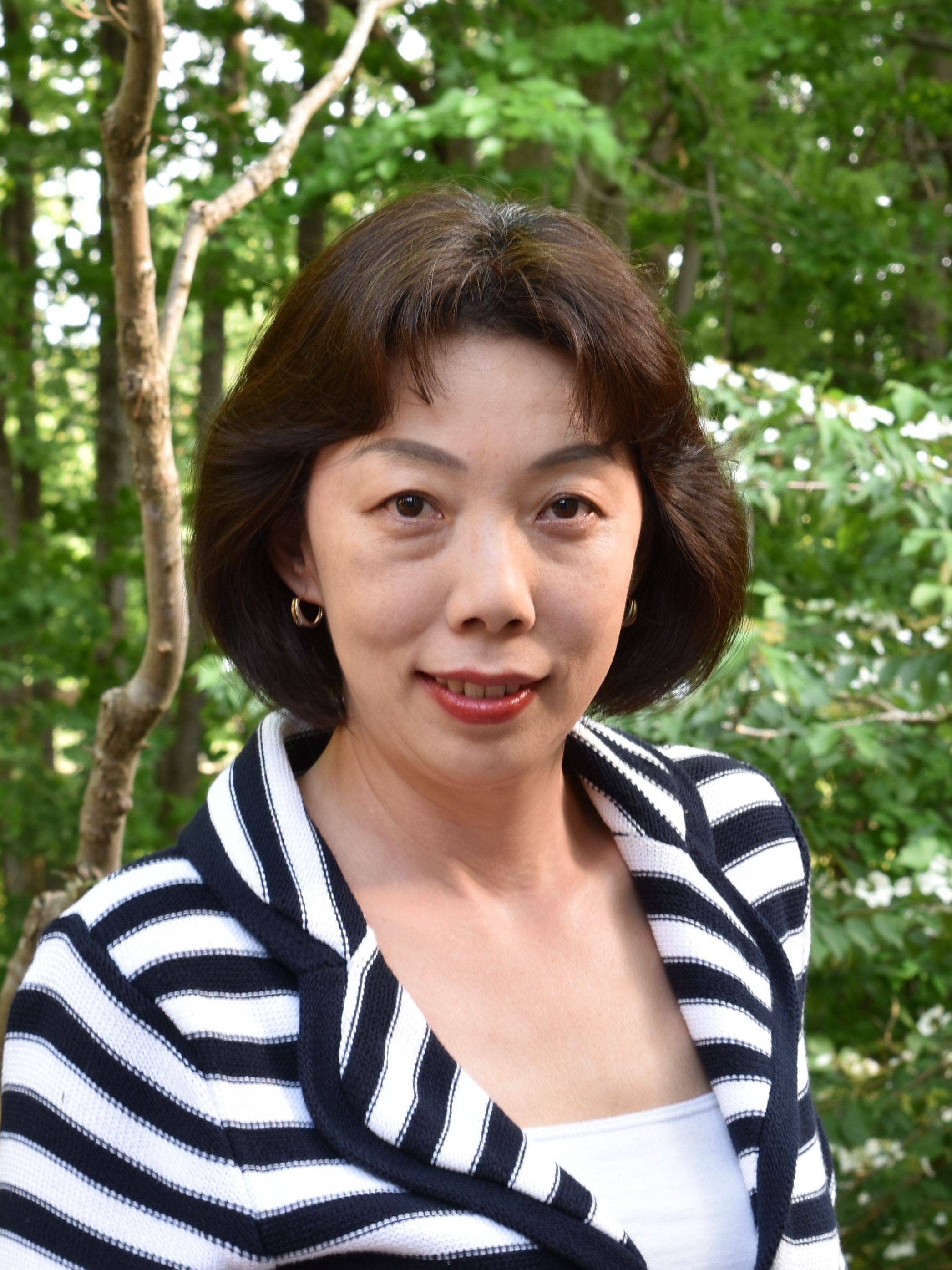
Hiromi Murakami is a visiting scholar at GRIPS and senior fellow at Economic Strategy Institute. She’s involved in various policy projects in US/Japanese institutions, including Center for Strategic and International Studies (CSIS) Global Health Policy Center, the Health and Global Policy Institute (HGPI), and SAIS Johns Hopkins University. Prior to joining CSIS, she led Asia research as a vice president at the Economic Strategy Institute in Washington, D.C., and taught courses at the Johns Hopkins School of Advanced International Studies (SAIS) in Washington. She holds an M.B.A. from St. Mary’s College and a Ph.D. in international relations from Johns Hopkins SAIS.